Split ends have a very good product industry behind them and one inconvenient fact in front of them. Once a hair strand splits, no oil, mask, or bond product puts it back together permanently. Products can make split ends look and feel better for a while. Only cutting above the split removes it. Everything useful about this topic follows from telling those two things apart.
If your ends tangle, look thin compared with the lengths above them, or feel rough no matter what you put on them, work through the troubleshooting steps below in order. They start with confirming what you are actually looking at in Mount Holly bathroom light, and end with the point where a small trim now prevents a much bigger cut later.
Step by step: from symptom to fix
- Confirm it is a split, not just dryness. Take a small section in good light and look at the last inch. A true split forks into two or more strands, bends at an odd angle, or tapers to a pale, thin point. Dry hair without splits still has a blunt, intact tip.
- Check how far the damage travels. Run your fingers up from the ends. If roughness and tangling stop within the last inch, the damage is contained. If strands catch and look frayed several inches up, splits have been traveling, which splits do: an open end keeps tearing upward like a run in fabric.
- Rule out product buildup. Wash once with a clarifying shampoo and condition as usual. If the ends feel smooth again, buildup was the problem. If the forked tips are still visible after washing and drying, they are structural, not cosmetic.
- Try the temporary smoothers, knowing their limits. A leave-in conditioner, a light oil on the ends, or a bond-support product can seal the surface, reduce friction, and make splits far less visible for a day or two. Use them to protect what remains, especially before heat styling, not as a reason to skip cutting.
- Cut above the split, not at it. A trim has to remove the full damaged section plus a small margin of healthy hair above it. Cutting exactly at the visible fork leaves weakened hair that splits again quickly, which is why dusting too little, too timidly, often disappoints.
- Reset the interval. After the trim, note the date. Fine, color-treated, and heat-styled hair commonly shows fresh splits sooner than thicker, uncolored hair. Watching when yours return tells you your real trim interval instead of a generic number from the internet.
What products can and cannot do
It helps to be precise here, because the honest version is not that products are useless. Conditioners coat the strand and reduce the friction that makes splits worse. Oils add slip and shine and make ends look joined. Some modern bond-building products support the internal structure of damaged hair and reduce breakage during brushing and styling. All of that is real, and for hair you are growing out, it matters.
What none of them do is fuse a forked tip back into a single strand for good. The improvement washes out or wears off because it is a coating or a support, not a repair of the physical split. Any claim that a jar reverses split ends permanently is asking you to believe the strand healed itself. Hair is not living tissue once it leaves the scalp. It cannot heal. It can only be protected, coated, or cut.

How small trims prevent big chops
The arithmetic is simple and it is the part people resist. A split left alone does not stay the same size. It travels up the strand, weakens more of the length, and breaks off unevenly, so hair that is never trimmed often looks shorter over time rather than longer, because the ends keep snapping.
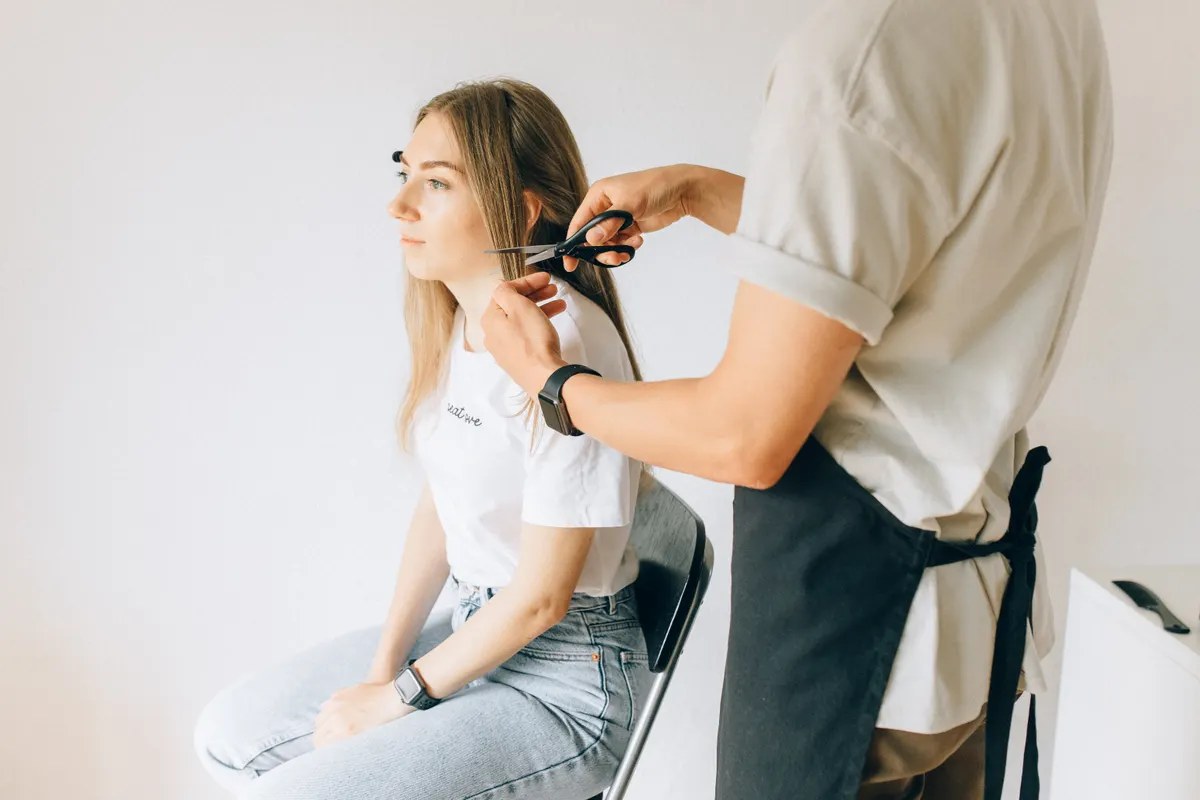
Regular small trims reverse that trade. Taking a quarter to a half inch at steady intervals removes splits while they are still short. Waiting a year and then asking for the damage to come off can mean several inches, because the stylist has to cut above the highest split, not the average one. Clients growing their hair out usually keep more total length with frequent dustings than with rare rescue cuts. At Uptown Salon in Mount Holly, that conversation fits naturally into a regular haircut appointment: keep the shape, clear the ends, and note when to come back based on how your hair actually behaved.
Habits that slow the next round
Once the split ends are gone, a few habits stretch the result. Detangle from the ends upward with a wide-tooth comb on wet, conditioned hair instead of ripping a brush through from the top. Use heat protectant and avoid passing an iron over the same section repeatedly, since ends are the oldest and driest part of the strand. Loosen tight ponytails in the same spot every day, which bend and weaken the same hairs. None of this makes hair split-proof. It delays the point where friction, heat, and age open the tips again, which is a worthwhile and honest goal.
Common questions
Can I search for and cut individual splits myself at home?
You can snip individual splits with sharp hair scissors as a stopgap, cutting just above each fork. Dull craft scissors crush the tip and create new splits, and this method misses most damage, so it does not replace a proper trim.
How often should split-prone hair be trimmed?
Many people do well every six to ten weeks, with fine, bleached, or daily heat-styled hair at the shorter end of that range. Your own pattern of when tangling and fraying return is the best guide.
Do split ends mean my hair is unhealthy overall?
Not necessarily. Ends are simply the oldest part of each strand and have taken the most washing, sun, and styling. Split ends are usually a maintenance timing issue, not a sign that all of your hair is damaged.
Photos in this guide are representative stock images.
← All guides from Uptown Salon← Back to Uptown Salon